ServicesRoof Inspections
Roof Inspections in Circleville
We get on your roof, check what matters and photograph what we find. You get a written report in plain words and an honest read on whether you need a repair, a replacement or nothing at all. If you're thinking about a claim, the report is built to help.
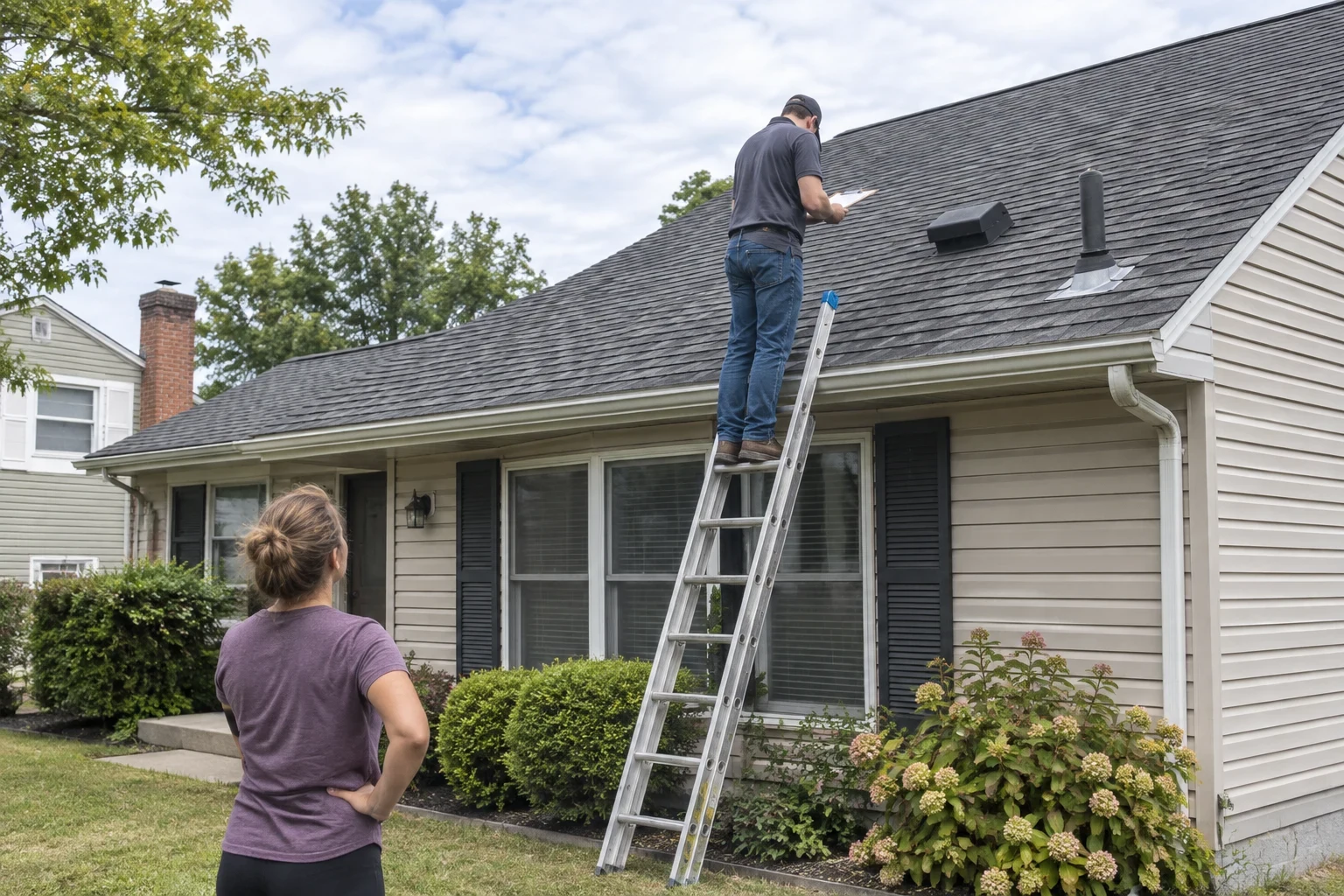
What a Roof Inspection Is For
An inspection shows you the real condition of your roof. Trouble tends to start small. One shingle tab that's popped up, a split rubber seal around a vent pipe or a section of flashing pulling away can leak quietly for months before anything shows inside.
Most calls we get fall into a few groups. Someone spotted a leak, they're buying or selling a house, the roof is getting on in years, or hail and strong wind just rolled through and they want to know if there's damage worth taking to their insurance company.
With that last group, we go carefully. We show you what we found and tell you what an adjuster usually checks. We won't tell you a claim will be paid. That decision is your insurance company's, and it's better you hear that from us at the start.
What We Check
- Shingle wear and lost granules
- Every slope gets checked for shingles that have split, cupped, folded over or blown away. Bald spots where the protective grit has worn off tell us a shingle is aging, and so does a pile of that grit sitting in the gutters.
- Flashing and roof penetrations
- Chimneys, skylights, valleys and the spots where the roof meets a wall are where most leaks get started. We check the metal flashing in those places, the caulk that seals it and the rubber collars around your plumbing vents.
- Decking and soft spots
- We cover the full roof on foot and note any area that feels spongy. A soft patch like that usually means the wood under the shingles has been wet for a while.
- Attic and ventilation
- If we can get into your attic, we look for daylight coming through, water stains, damp insulation and, in cold months, frost on the nail tips. Poor airflow up there cooks the shingles in summer and helps ice dams form in winter.
- Gutters, soffit and fascia
- We check that water leaves the roof and gets carried away from your home. Sagging gutters, rotted fascia boards and gaps in the soffit all go in the notes, since the cause often starts on the roof.
- Dated photos and a written report
- Every finding gets a dated photo. Your report says what we saw, where on the roof it is and what we'd do about it, ranked by how soon it needs attention.
Signs It's Time for an Inspection
Water marks inside
A brown ring on the ceiling or paint that's starting to blister means water found a way past the roof. The opening up top is often several feet from the mark you see.
After hail or a hard wind
Hail dents on shingles rarely show from the ground. When you notice roofing crews working your street after a storm, have yours looked at and photographed while any marks are still fresh.
Ice dams last winter
A ridge of ice along the eaves can force water up under shingles. Central Ohio's freeze and thaw cycles make this common, and the damage often appears come spring.
Shingles in the yard or gutters full of grit
Shingles blowing off and heavy granule loss both say the roof is wearing out faster than it should.
The roof is 15 years old or more
Plenty of asphalt roofs start to show wear around then. Checking now lets you plan ahead instead of waiting on a leak.
What Affects the Cost of an Inspection
An inspection is usually a short job, but not every roof takes the same time. We'll tell you the price on the phone before we come out. Here's what moves it.
Size and pitch of the roof
A bigger or steeper roof takes longer to walk safely and photograph fully.
Attic access
An easy attic hatch adds little time. A cramped attic or no access at all changes how we check for leaks.
Level of documentation
A quick check before you list your home is simpler than a full photo report for an insurance claim, which needs each problem marked and shot from more than one angle.
Number of layers and roof age
Older roofs with more than one layer of shingles take more looking to judge the decking underneath.
How the Inspection Goes
- 1
You call and we talk it over
Tell us what you've seen and why you want the roof checked. If it's for an insurance claim or a home sale, mention it, so the report covers what you'll need.
- 2
We look from the ground first
We circle your home and check roof lines, gutters, fascia and anything that looks off. That tells us where to spend our time once we're up.
- 3
We get on the roof
If the roof is safe to walk, we work it one section at a time and photograph as we go. On steep or wet roofs we may check from ladders at the edges and look closer from the ground, and we'll tell you if that limits what we can see.
- 4
We check the attic if we can
A few minutes up there often settles what the roof alone can't, like the actual spot where water is getting in.
- 5
We go over the findings with you
While we're still on site, we pull up the photos and point out what's serious and what can wait. The written report follows. If something needs fixing, we'll lay out your options for roof repair or roof replacement and put an estimate in writing.
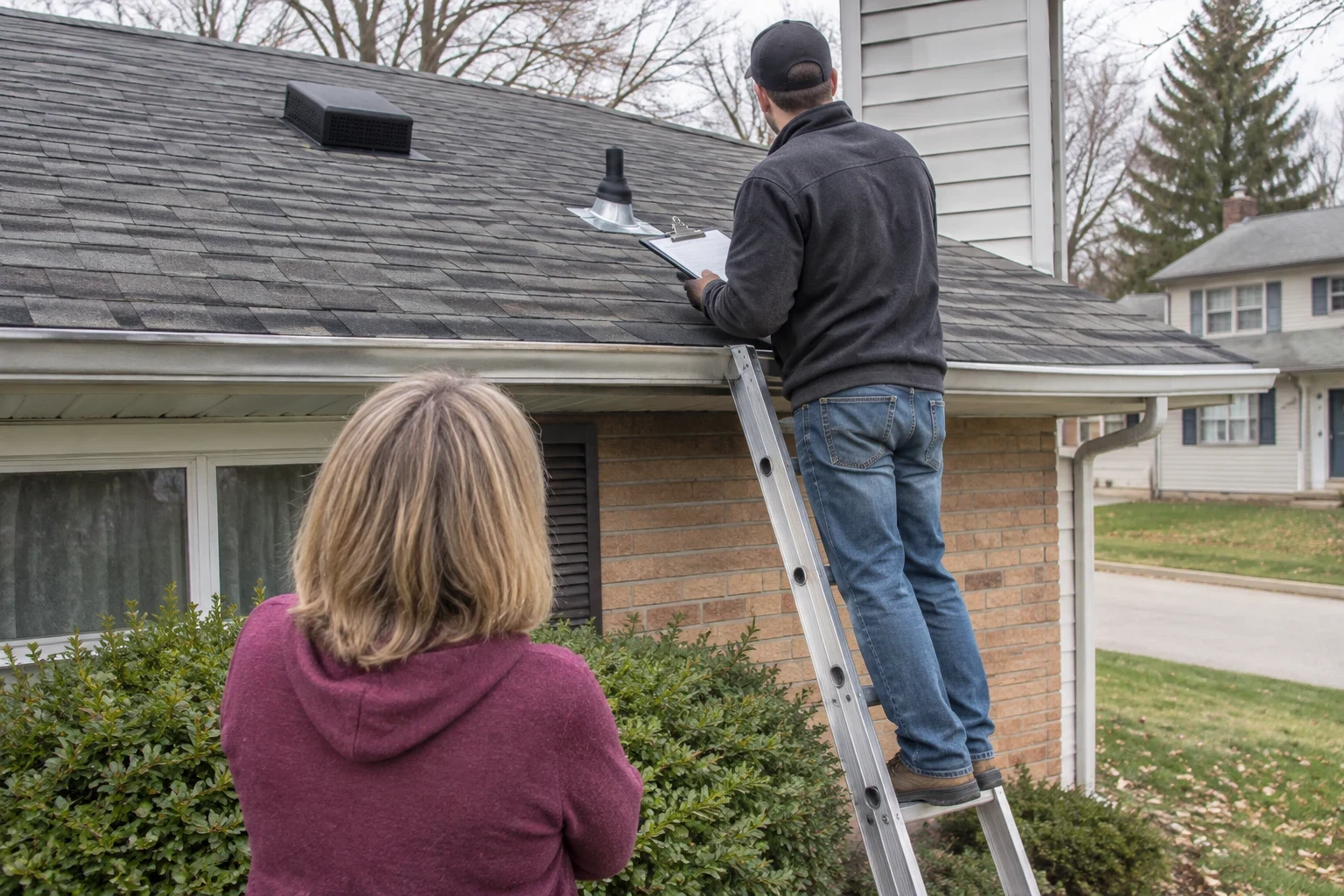
Roof Inspection Questions
Will your report get my insurance claim approved?
Only your insurance company decides that. Our report lays out what's on your roof, with dated photos and where each problem sits. You can hand that to your adjuster, and we'll explain what they tend to check.
Can you be there when the adjuster comes out?
Bring it up when you call. It can help to have the person who inspected the roof there to point things out. Our job on that day is to show the damage, not to argue your claim or stand in for the adjuster.
Do I need to be home during the inspection?
The roof part doesn't need you. For the attic, someone has to let us inside. Most folks stick around for the end so they can go through the photos with us and ask what they want.
What if you find nothing wrong?
We say so. A lot of roofs need a couple of small fixes or nothing. You still keep the photos and report, which are good to have on file.
Which towns do you cover for inspections?
Circleville and the towns around it, including Ashville, South Bloomfield, Commercial Point, Groveport and Lithopolis. If you live close by but your town isn't named here, just ask on the phone.
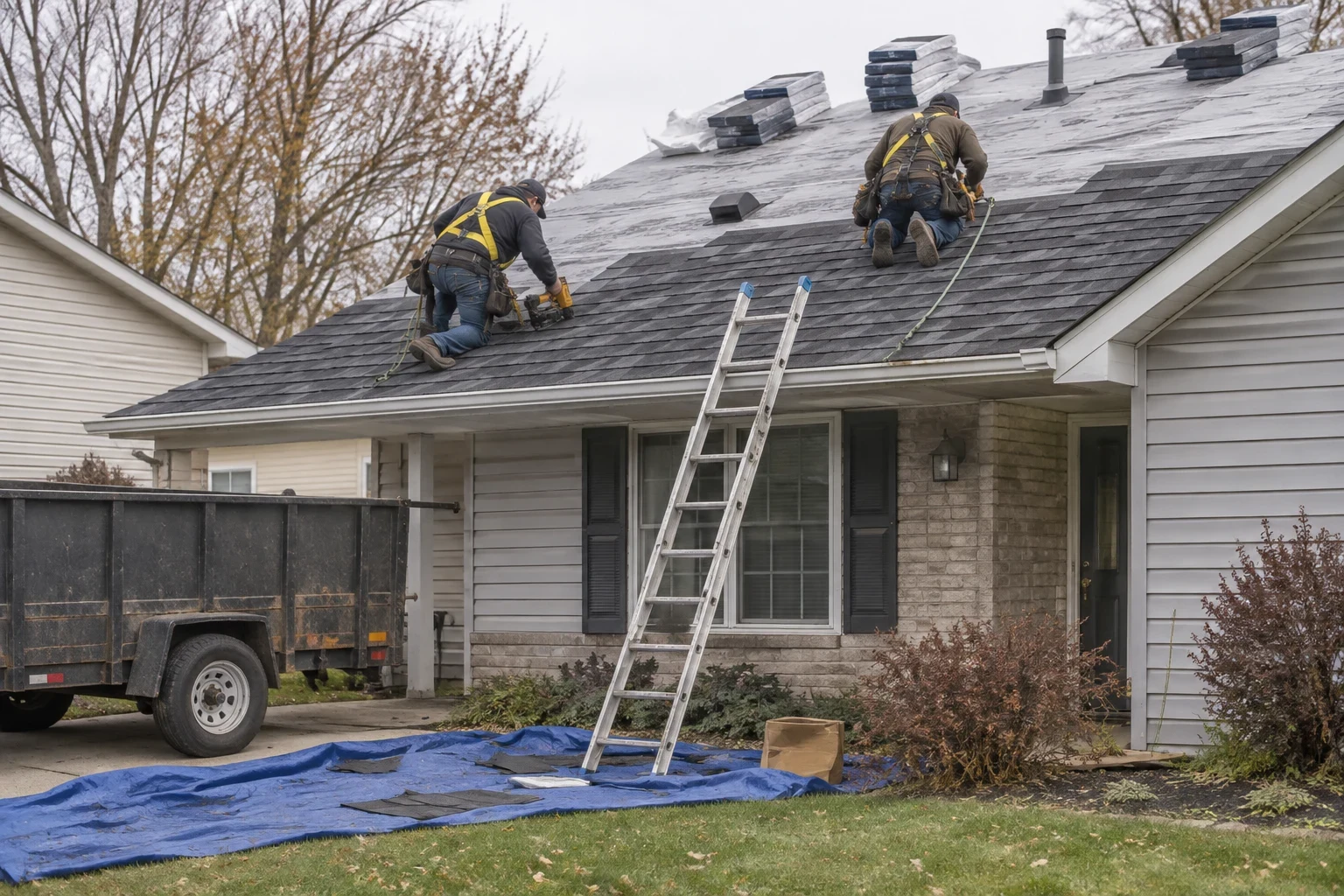
Know What Your Roof Needs Before You Decide
Tell us what you've noticed and why you want the roof checked, and we'll set a time to come out. You'll walk away with dated photos, a written report and a straight answer on what to do next.